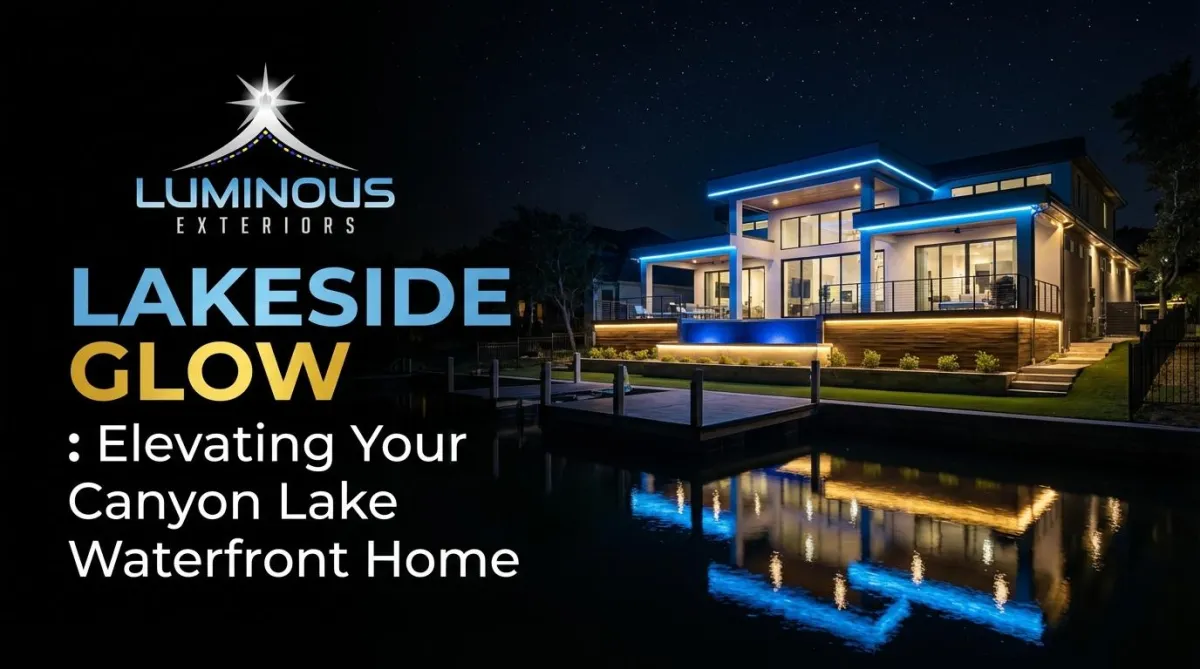
Lakeside Glow: Elevating Your Canyon Lake Waterfront Home
Lakeside Glow: Elevating Your Canyon Lake Waterfront Home
There is a distinct magic to Canyon Lake once the sun dips below the horizon. The vibrant activity of boating and jet-skiing fades into a serene silence, replaced by the gentle lapping of water against the limestone shoreline and the vast, starry expanse of the Texas sky. For homeowners lucky enough to possess a waterfront property here, the transition from day to night offers an entirely new canvas for architectural beauty and outdoor living. However, capturing this magic requires more than just flipping a switch on a porch light.
Creating the perfect "Lakeside Glow" is an art form that balances aesthetic brilliance with functional safety and environmental stewardship. It is about crafting an atmosphere that extends your living space down to the water’s edge while respecting the natural darkness that makes the Hill Country so special. Whether you are looking to enhance your evening entertaining capabilities, increase your property's safety on steep slopes, or simply admire the reflection of the moon on the water from your living room, a strategic approach to exterior illumination is essential.
In this comprehensive guide, we will explore how to elevate your Canyon Lake home through thoughtful lighting, landscaping, and smart technology. We will dive deep into the nuances of Comal County's Dark Sky advocacy, the technicalities of lighting steep gradients, and the synthesis of fire and light features that define the ultimate lakeside ambiance. Join us as we illuminate the path to a more beautiful waterfront lifestyle.
What is the 'Lakeside Glow' and How Do You Achieve It?
The 'Lakeside Glow' is a cohesive design philosophy that harmonizes warm-temperature landscape lighting (2700K-3000K), strategic fire features, and shoreline integration to create a seamless visual connection between a home and the water. Unlike standard suburban lighting, which often focuses solely on the front façade, the Lakeside Glow prioritizes the rear elevation and the vertical journey down to the lake. Achieving it requires a layered approach: using ambient light to soften hardscapes, task lighting for safe navigation of docks and stairs, and accent lighting to highlight native vegetation—all while utilizing shielded fixtures to prevent light pollution and glare.
Defining the 'Lakeside Glow': A Holistic Aesthetic
The Psychology of Waterfront Ambiance
Living by the water taps into a primal desire for tranquility and connection with nature. The lighting you choose for your Canyon Lake home should reinforce this psychological state, not disrupt it. Harsh, cool-white floodlights can trigger alertness and anxiety, shattering the peaceful mood of a lakeside evening. Instead, the goal is to mimic the soft, warm hues of a campfire or sunset. This approach signals to the brain that it is time to unwind, fostering deep relaxation and social connection.
To achieve this, we focus on the color rendering index (CRI) and color temperature of the LED fixtures. A high CRI ensures that the rich greens of your Live Oaks and the warm tones of your limestone patios look natural and vibrant, rather than washed out. By carefully selecting fixtures that emit a soft, warm glow, we create an inviting environment that draws guests outdoors and encourages them to linger long into the night.
Why Temperature Matters: 2700K vs. 3000K
In the world of professional outdoor lighting, the difference between 2700 Kelvin and 3000 Kelvin is significant, especially in a waterfront context. 2700K produces a very warm, golden light similar to an incandescent bulb. This temperature is ideal for intimate spaces, such as fire pit seating areas or romantic dining patios, as it enhances the coziness of the setting.
On the other hand, 3000K offers a slightly crisper, cleaner white light while still remaining warm. This is often the preferred choice for illuminating architectural features, retaining walls, and dense vegetation. For Canyon Lake homes, a blend is often best: using 3000K to highlight the texture of the native stone and trees, and 2700K for areas where people gather. This subtle contrast adds depth and dimension to the landscape without creating jarring visual transitions.
Exterior Illumination: Balancing Ambiance with Regulations
Understanding Comal County’s Dark Sky Advocacy
One of the most critical aspects of lighting a home in the Texas Hill Country is respecting the night sky. Comal County is home to active "Dark Sky" advocacy groups dedicated to preserving our view of the stars and protecting local wildlife. Light pollution not only washes out the Milky Way but can also disrupt the circadian rhythms of nocturnal animals and migratory birds that frequent the lake.
Compliance doesn't mean living in the dark; it means lighting intelligently. This involves using full-cutoff fixtures that direct light downward, never upward or sideways where it is wasted. It also means utilizing timers and dimmers to reduce light output when it is not needed. At Luminous Exteriors, we specialize in designing systems that meet these rigorous standards, ensuring your home glows beautifully without contributing to skyglow.
Navigating POA and ACC Restrictions
Waterfront communities around Canyon Lake often have strict Property Owners Associations (POAs) and Architectural Control Committees (ACCs). These bodies regulate everything from the type of fixtures you can install to the brightness levels permitted at the property line. It is crucial to distinguish between the general Dark Sky advocacy of Comal County and the specific, often more granular, bylaws of your specific subdivision.
For example, some communities may strictly forbid any light source from being visible from the lake surface to prevent blinding boaters. Others may have specific setbacks for pole lights near the water. We recommend reviewing your deed restrictions carefully before beginning any project. A professional lighting design plan can often be the key to gaining quick approval from an ACC, as it demonstrates a commitment to preventing light trespass and glare.
Fixture Selection for Compliance and Beauty
Selecting the right fixtures is the bridge between aesthetic desire and regulatory compliance. To satisfy Dark Sky principles and POA rules, we prioritize "shrouded" or "shielded" lights. These fixtures house the light source deep inside a protective cowl, ensuring that the light is cast only on the intended subject—a path, a tree, or a wall—rather than spilling into your neighbor's window or up into the sky.
Furthermore, we utilize low-voltage LED systems that allow for precise control over lumen output. Instead of blasting a tree with 1000 lumens, we might use two 300-lumen fixtures from different angles to create a softer, more dimensional effect. This technique, known as "layering," provides ample visibility for safety and security while maintaining the low-profile, respectful aesthetic that defines the best Canyon Lake homes.
Fire & Water: Integrating Fire Pits and Pool Features
The Primal Connection of Fire by Water
There is something deeply satisfying about sitting by a fire while looking out over the water. It combines two of nature’s most powerful elements. The "Lakeside Glow" aesthetic leans heavily into this combination. Integrating a gas or wood-burning fire pit into your lakeside terrace provides a natural focal point for evening gatherings. However, the lighting surrounding the fire pit is just as important as the fire itself.
Lighting in these zones should be minimal and extremely warm (2200K-2700K) to complement the flickering flames rather than competing with them. Under-cap lighting on seating walls or very low-lumen path lights can define the perimeter of the fire pit area without ruining the mood. The goal is to allow the fire to be the star of the show while ensuring guests can safely move around the space.
Lighting Pools to Complement the Lake
Many Canyon Lake waterfront homes feature infinity-edge pools that visually merge with the lake. Lighting these pools requires a delicate touch. Over-lighting a pool can turn it into a glowing neon soup that distracts from the lake view beyond. Instead, we advocate for subtle, internal pool lighting that can be dimmed or color-tuned to match the mood.
Darker pool finishes often look best with cooler, blue-toned lights that mimic moonlight, while lighter finishes can be warmed up to match the landscape lighting. The key is to ensure that the pool lighting does not create a "mirror effect" on the glass windows of the home, which would obscure the view of the lake at night. By balancing the internal pool lights with the external landscape lights, we create a continuous visual flow from the home, across the pool, and out to the dark water of the lake.
Landscaping Logic: Xeriscape for Slope & Shoreline
Lighting Drought-Tolerant Native Plants
The rugged terrain of Canyon Lake often calls for xeriscaping—landscaping that uses drought-tolerant, native plants like Red Yucca, Texas Sage, and Agave. These plants have distinct architectural shapes that look stunning when illuminated correctly. Unlike the soft, leafy canopies of traditional gardens, xeriscapes offer dramatic shadows and silhouettes.
To highlight a sculptural Agave or Prickly Pear cactus, we use silhouetting or shadowing techniques. Placing a light in front of the plant casts its shadow onto a wall or rock face behind it, creating a piece of living art. Alternatively, placing a light directly behind the plant can create a dramatic silhouette against a lit wall. For low-growing ground covers and river rock beds, a wash of soft light from a low elevation brings out the texture and color of the stone, grounding the home in its natural environment.
Mastering the Slope: Tiered Garden Lighting
One of the defining features of Canyon Lake property is the slope. Most waterfront homes sit significantly higher than the water level, requiring tiered gardens and retaining walls to manage the grade. Lighting these vertical transitions is essential for both safety and aesthetics. A pitch-black slope is not only a fall hazard but also a visual void that makes the backyard feel smaller.
We approach slope lighting by treating each tier as a distinct visual layer. We might install linear hardscape lights under the capstones of retaining walls to wash the stone face with light. This emphasizes the architecture of the landscaping and provides a soft, indirect glow. Additionally, we stagger path lights along switchback trails to guide the eye and the feet down the hill. This "ladder of light" connects the upper deck to the waterfront, making the entire property feel expansive and cohesive.
The Waterfront Threshold: Safe and Stylish Dock Lighting
Safety First: Illuminated Pathways to the Water
The journey from the house to the dock is often the most treacherous part of a waterfront property, especially at night. Uneven limestone steps, gravel paths, and wooden boardwalks require dedicated task lighting. However, "safety lighting" does not have to mean "airport runway lighting."
We utilize shielded path lights and step lights that cast illumination directly onto the walking surface. This prevents glare from hitting the eyes of the person walking down, which is crucial for maintaining night vision. By keeping the light source low to the ground, we ensure that every step is clearly defined without polluting the surrounding darkness. Motion sensors can also be a smart addition here, bringing up the light levels only when someone is actually using the path.
Managing Reflections and Boater Safety
One of the most overlooked aspects of lakeside lighting is how it appears from the water. Lights aimed directly at the lake can create blinding glare for boaters, which is dangerous and often a violation of local regulations. Furthermore, improper lighting can ruin the beautiful reflection of your home on the water.
To manage this, we strictly adhere to the principle of "shoreward aiming." All fixtures near the water should be aimed back toward the land or straight down onto the dock surface. This illuminates the dock for your use while keeping the light out of boaters' eyes. It also has the added benefit of highlighting the shoreline and your boat slip, creating a warm, inviting destination when viewed from the lake, rather than a harsh beacon.
The Indoor Connection: Maximizing Views
Blurring the Lines: Lighting for Glass Walls
Modern waterfront homes frequently feature massive sliding glass doors and floor-to-ceiling windows to capture the view. However, at night, untreated glass becomes a black mirror, reflecting the interior of the room and obscuring the view outside. To counter this, the light levels outside must be balanced with the light levels inside.
By illuminating the vertical surfaces outside—trees, fences, or retaining walls—we give the eye something to focus on beyond the glass. This reduces the reflection and allows you to see "through" the window, effectively extending your living room visually into the backyard. This technique makes interior spaces feel larger and keeps the connection to the lake alive even when you are indoors.
Interior Layering that Supports Exterior Views
Your interior lighting choices also play a role in the Lakeside Glow. Dimmable recessed lighting and warm lamps help lower the ambient light level inside, further reducing window reflections. We recommend installing dimmers on all main living area circuits. When you want to enjoy the view, dim the inside lights and let the exterior landscape lighting take center stage. This simple adjustment transforms the mood of the home and highlights the investment you've made in your outdoor spaces.
Smart Systems: Automating Your Lakeside Atmosphere
Zoning for Different Activities
Not every evening on the lake is the same. Sometimes you are hosting a large barbecue; other times you are enjoying a quiet glass of wine or stargazing. Smart lighting systems allow you to zone your outdoor space to match these activities. With a tap on your smartphone or a voice command, you can activate the "Party" scene, which brightens the deck, dock, and path lights for maximum visibility.
Conversely, a "Stargazing" scene might turn off all upward-facing lights and dim the path lights to 20%, leaving just enough glow for safety while preserving your view of the Milky Way. This flexibility is the hallmark of a modern, luxury lighting system. It puts you in control of your environment, allowing you to curate the atmosphere instantly.
Seasonal Transition Strategies
Canyon Lake experiences distinct seasons, from the blazing heat of summer to the crisp, cool nights of winter. Your lighting should adapt accordingly. In the summer, you might want brighter, cooler lights for active swimming and boating evenings. In the winter, warmer, dimmer tones feel cozier and more appropriate for huddling around a fire pit.
With Luminous Exteriors' smart programmable systems, these transitions can be automated. We can program your lights to turn on earlier as the days get shorter in the winter, and adjust the color temperature or brightness based on the calendar. This ensures that your home always looks its best and functions perfectly, regardless of the season.
Unique Value: The Luminous Lakeside Audit Checklist
Ready to transform your property? Before you buy a single fixture, run through our Luminous Lakeside Audit. This framework helps identify the specific needs of your unique terrain and lifestyle.
- The View Test: Stand in your main living room at night with the lights on. Can you see the lake, or just your own reflection? If it's the latter, you need more vertical illumination outside.
- The Slope Safety Check: Walk from your back door to the water's edge at twilight. Are there any "black holes" where you can't see your footing? These are your priority zones for task lighting.
- The Boater's Perspective: If possible, go out on a boat (or kayak) at night and look back at your home. Are there any lights blinding you? Are your best features (trees, stone work) visible, or lost in the dark?
- The Dark Sky Compliance Review: Look at your existing fixtures. can you see the bulb directly from the side? If so, they are likely creating glare and light pollution. Swap them for shrouded, downward-firing fixtures.
- The "Zone" Identification: Map out your outdoor areas: Dining, Lounging, Transit (stairs/paths), and Water Access. Each zone requires a different lighting strategy and potentially its own dimming zone.
Conclusion
Elevating your Canyon Lake waterfront home with the "Lakeside Glow" is about more than just curb appeal; it is about extending your lifestyle. It transforms a dark, undefined backyard into a vibrant, usable living space that celebrates the unique beauty of the Texas Hill Country. By balancing aesthetic warmth with safety, regulatory compliance, and smart technology, you can create a property that is as breathtaking by night as it is by day.
Whether you are navigating steep limestone slopes, preserving the sanctity of the dark sky, or simply setting the mood for a summer evening, the right lighting makes all the difference. Don't let the sun set on your outdoor living experience.
Ready to craft your own Lakeside Glow? At Luminous Exteriors, we are experts in designing and installing premium, smart outdoor lighting solutions tailored to the unique landscapes of Texas. Let us be the artists of your outdoor space.


